By Taghreed Saadeh
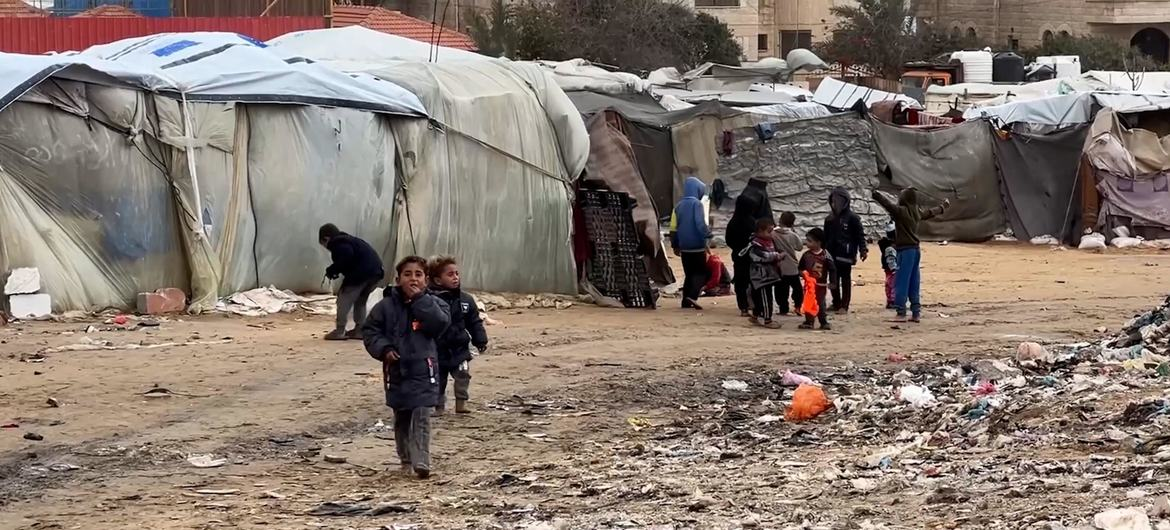
What is unfolding in the Gaza Strip represents a complex humanitarian crime that exceeds human capacity to endure or adapt to. After more than two years of a devastating war, hundreds of thousands of Palestinians are living in tents or on the streets without shelter, amid claims that the war has “formally” ended, while Gaza continues to lose lives daily and suffer under increasingly harsh winter conditions.
Despite international efforts, initiatives to halt the humanitarian collapse have so far failed. Recently, Italy and Germany signed a joint declaration following a meeting in Rome between Italian Foreign Minister Antonio Tajani and his German counterpart Johann Wadephul, stressing the urgent need to ensure the flow of humanitarian aid into Gaza.
The joint statement reaffirmed Rome’s and Berlin’s support for the peace plan approved by the UN Security Council, which calls for the resumption of humanitarian assistance without obstruction. It also emphasized the creation of a joint platform to coordinate efforts between the private sector and civil society, while underscoring the central role of the United Nations and non-governmental organizations in delivering effective humanitarian response.
Meanwhile, the United Nations announced that Israel continues to obstruct the entry of humanitarian aid into Gaza despite severe weather conditions, warning of an increased risk of newborns freezing due to the cold. Local sources reported that thousands of families have spent nights in extremely harsh conditions without safe shelter or heating, while children suffer from a severe shortage of winter clothing and blankets.
The UN Office for the Coordination of Humanitarian Affairs (OCHA) warned that delays in aid delivery are largely due to the prioritization of commercial shipments over humanitarian supplies, as winter storms continue to worsen the already critical living conditions of displaced families.
Olga Cherevko, OCHA’s spokesperson in Gaza, stated that humanitarian needs are growing faster than organizations’ ability to respond. She noted that restrictions on aid entry, including the prohibition of heavy machinery and spare parts needed to repair damaged infrastructure, are severely hindering relief efforts.
According to the United Nations, approximately 1.3 million Palestinians remain in need of shelter assistance. In recent days, relief teams have distributed around 3,800 tents, more than 4,500 plastic sheets, and thousands of mattresses, assisting nearly 4,800 families. Food aid and cooking supplies have also been provided to help families cope with the immediate effects of flooding.
Cherevko warned of rising risks of hypothermia (risk of fatal cold exposure) , particularly among infants, stressing that newborns face a real and immediate danger due to the lack of adequate heating.
The United Nations also noted that the number of available routes and crossings for aid delivery remains limited, with repeated delays caused by imposed restrictions and procedures. OCHA stressed the urgent need to remove all such obstacles, affirming that while the capacity to respond exists, access constraints continue to prevent timely assistance to those in need.
These warnings follow reports of the death of an infant in Khan Younis, southern Gaza, due to cold exposure after her tent was flooded by rainwater. Meanwhile, thousands of tents across the Strip have turned into pools of water and mud, alongside warnings that partially destroyed homes are at risk of collapse, posing a direct threat to the lives of hundreds of thousands of Palestinians.
 110 Total Count