By Taghreed Saadeh
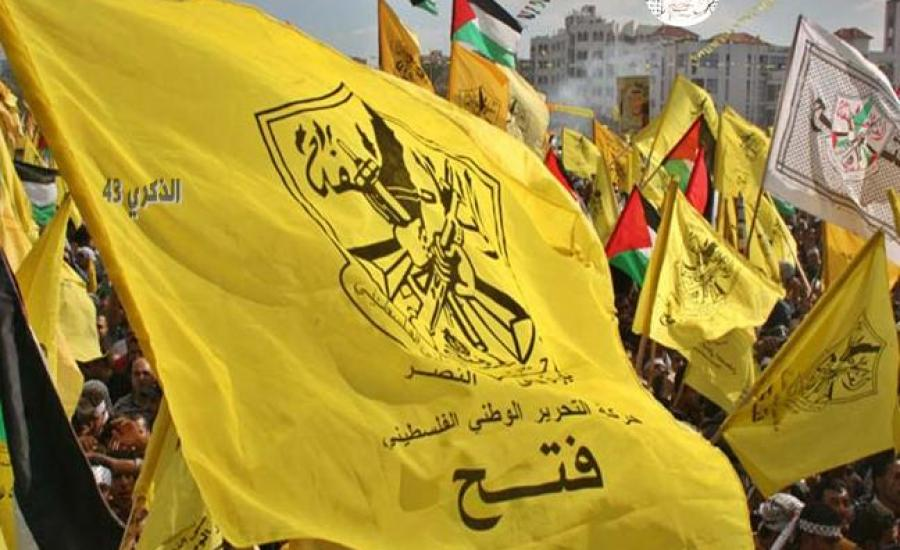
In recent times, social media platforms have witnessed a growing wave of assessments and writings criticizing the historical role of the Fatah movement. Much of this criticism accuses the movement of surrender or corruption, without relying on solid evidence or sound research methodology, and without distancing itself from the emotional and reactive tone that dominates many of these texts.
Authors of such articles or posts often claim to be acting out of concern for the movement. However, most of these critiques lack serious academic grounding, particularly when they come from figures associated with the left who present themselves as researchers at study centers or as university professors.
Throughout its history, Fatah has never enjoyed organized political protection comparable to that of some Arab regimes. Instead, its popular base has always been its real shield. At the same time, Fatah has consistently found itself at the center of media battles. This confrontation has intensified dramatically with the rise of social media, digital journalism, and the expansion of television channels that have adopted political agendas hostile to the movement, such as certain coverage by Al Jazeera or through media platforms supported by Fatah members who oppose President Mahmoud Abbas.
In contrast, Fatah failed to establish effective media defense channels and left this field unattended for many years, without clear organization or strategy. This long-term neglect exhausted the movement and kept it under constant scrutiny. As a result, facts became mixed with rumors, and it became increasingly difficult to distinguish between misinformation and reality, or between objective criticism and political attacks.
Politics, by nature, is constantly changing. Therefore, it is essential to examine each stage within its full objective context. When discussing Oslo, the Second Intifada, or the period following the late President Yasser Arafat, these moments cannot be approached through emotion or personal mood. They require a careful reading of the circumstances and the options that were realistically available at the time, rather than being judged through revolutionary slogans and emotional narratives that later shaped much of the criticism.
At its core, criticism is a dynamic process that should evolve according to clear methodologies. Political solutions have never been fixed; they have always shifted rapidly in response to changing realities. Yet the focus on slogans by leftist forces, Islamist groups, and even some internal Fatah opponents has allowed political discourse to be dominated by rhetoric instead of practical and realistic solutions that truly serve the Palestinian cause.
Following this escalating criticism, it often appears as though all failures are attributed solely to Fatah. Objectively speaking, there are indeed serious shortcomings but responsibility is shared by all Palestinian political forces. Meanwhile, criticism of Hamas is often avoided, and the movement is presented as the sole form of resistance, without considering the Palestinian social contract, which historically believed in popular marches, protests, and forms of struggle that do not rely exclusively on armed resistance.
Struggle is a long journey that requires patience and continuity. At many points in our history, we affirmed that remaining on the land itself is one of the greatest forms of resistance.
For this reason, I call for restraint and for the convening of an internal Palestinian conference that brings together intellectuals, media professionals, and political actors to engage in a deeper and more responsible dialogue. Continuing non-objective criticism without a genuine reading of reality is like blowing air into a punctured tire. More dangerously, some intellectuals and critics believe they have “done their part,” without realizing that they have failed to understand reality as it is and that they have contributed, intentionally or unintentionally, to confusing public awareness.
If this approach continues, we will remain behind، perhaps even further back than the position we believe we are in today.
 89 Total Count