By Taghreed Saadeh
In Arab heritage, there are many expressions that still reflect the essence of this Nation and the values upon which it was built, honor, courage, dignity, and a spirit of solidarity embodied in the well-known saying: “Me and my brother against my cousin, and me and my cousin against the stranger.” These were not merely sayings, but a social framework that shaped a cohesive Arabic Nation, one that knew how to protect itself and defend its existence.
Arabs are a people with a deep-rooted history and a civilization that cannot be denied or overlooked. Just as great empires once led history, Islamic civilization, under Arab leadership and with its prominent figures, stood at the forefront of the world for centuries. Its reach extended east and west, contributing significantly to human knowledge and serving as a source of inspiration for others, particularly Europe, which built upon its sciences in its own advancement.
Those who diminish this reality or attempt to obscure it are either ignorant of history or deliberately distorting it. Islamic civilization was inclusive, encompassing diverse communities, including Arab Christians, who were an integral part of its fabric.
The issue today, however, lies not in history but in the present. What we increasingly hear is a tone of disregard toward the Arab Nation, with some portraying it as weak or subordinate, without recognizing the clear projects aimed at weakening and fragmenting the region. In reality, the Arab condition is not unique; even so-called “first-world” countries operate within systems of dependency, particularly in relation to the United States.
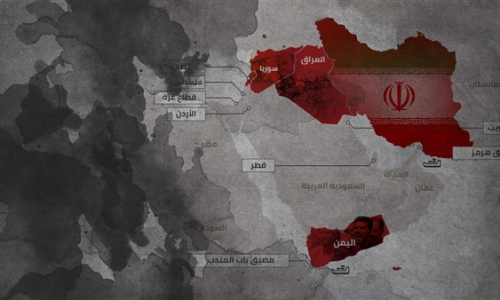
Despite this, some continue to approach these realities with denial or oversimplification, even going so far as to defend Iran, as if the current conflict were solely between Iran and Israel. In truth, the situation reveals direct targeting of Arab states themselves, with Tehran seizing opportunities to weaken and destabilize them.
Some go further, portraying Iran as a savior of the Palestinian cause. Yet it is impossible to ignore how Iran has used this cause as a tool to expand its regional influence, rather than as a genuine commitment to its defense. During prolonged periods of escalation in Gaza, especially throughout more than two years of massacres carried out by the occupation, Iran refrained from direct intervention in support of Palestinians, despite being fully aware of the nature and potential expansion of the conflict. This behavior clearly demonstrates that its priorities lie in safeguarding its strategic interests and postponing major confrontations, even at the expense of Palestinian lives, rather than in genuinely pursuing liberation. The slogan of “supporting resistance” thus functions largely as a political cover, detached from real commitment.
Similarly, the experience of media and political tools deployed through platforms such as Al Jazeera provides a clear example of the dangers of aligning with agendas. Certain voices were promoted to shape public opinion and influence the direction of the Palestinian cause in ways that served the projects of the Muslim Brotherhood and Hamas. However, as interests shifted, many of these same tools were sidelined or even detained, as has been reported. This reality highlights a fundamental truth، tools are used and then discarded. They operate within defined roles, subject to the fluctuations of politics, roles that can be reversed entirely when circumstances change. Today, Hamas stands closer to Iran than to Qatar, and media voices once aligned with Doha now echo Tehran. Who would have imagined such a reversal? Yet it reveals how narratives are constructed and dismantled.
The duty of peoples today goes beyond merely recalling Arab history; it requires a deep, conscious reading of the present, free from misinformation and directed media influence. It demands an understanding of the broader context, how supporters are sometimes mobilized in the name of Palestine without real action to serve it, and in some cases, in ways that contradict its very essence.
It is therefore no coincidence that actors such as Tehran and Al Jazeera have raised the banner of supporting Palestine while simultaneously contributing to the fragmentation and weakening of the Palestinian landscape, particularly over the past two decades, since the emergence of Hamas.
 21 Total Count