By Taghreed Saadeh
In recent years, the Palestinian cause has ceased to be solely a struggle against occupation; it has transformed into an internal conflict no less brutal. Caught between an Authority struggling to preserve a national project and international legitimacy led by Fatah and a movement ruling Gaza by force and presenting itself as the sole voice of resistance represented by Hamas, the Palestinian finds themselves torn between two visions. This split became even sharper after the events of October 7, which exposed the depth of the divide and reopened the question of identity and direction.
The Palestinian division is no longer merely political; it has become a battle over the very meaning of resistance and nationalism. Today’s landscape cannot be understood through the simple binary of “for or against,” because the cause has turned into a space where regional and international interests intersect, and where partisan calculations are deeply entangled with the daily suffering of ordinary people. While some reduce the picture to: “with Hamas” or “with the Authority and Fatah,” the truth is far more complex.
Since Hamas’ takeover of the Gaza Strip in 2007, the territory has turned into something resembling a “private territories” where no voice rises above its authority. Opposition was crushed, anyone who attempted to criticize or hold it accountable was persecuted, and ordinary people bore the brunt of a suffocating blockade that left the poor and the vulnerable to pay the price alone.
The irony is that Israel, which financially and politically besieged the Palestinian Authority in the West Bank and Jerusalem denying it access to its rightful tax revenues, is the same actor that allowed millions of dollars to flow monthly to Hamas via Qatar. This may seem contradictory, but it is central to the policy of “managing the conflict”: empowering one side at the expense of another, inflating an “enemy” in the media, and blocking any political pathway that might lead to a settlement or recognition of Palestinian rights.
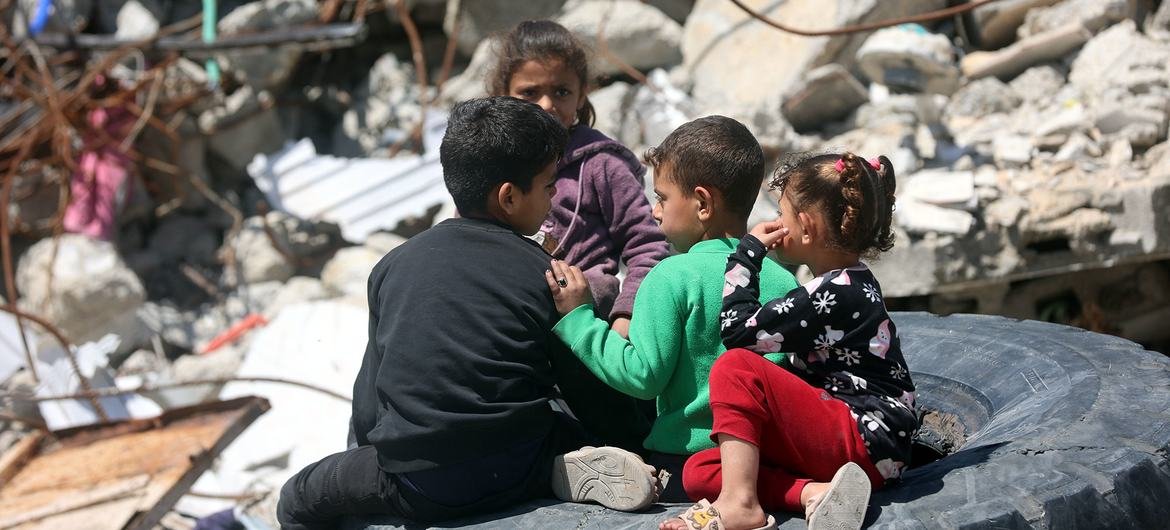
The events of October 7 were not only shocking; they revealed a truth long concealed behind passionate speeches and slogans. Israel reoccupied more than half of the Gaza Strip, thousands of civilians were killed, and infrastructure was destroyed on an unprecedented scale.
And under the Trump plan that Hamas itself signed onto, the movement gave up nearly 58% of the Strip’s land as part of political and security understandings, a loss that grows daily.
Meanwhile, the Palestinian Authority continued its diplomatic work at the United Nations, defending all Palestinians and relying on the independence project launched by the PLO in 1988. Despite its financial weakness and political isolation, it remained committed to the path of statehood and international protection, refusing to sacrifice Palestinian lives for partisan gains.
Hamas’ positions oscillate between messages seeking American support to preserve its rule and statements in which it claims to be pragmatic and ready to make concessions to the international community. The common thread behind all these shifts, however, is the clinging to power, even at the expense of the people.
It is no secret that the movement benefited for years from the Muslim Brotherhood project, as well as from extensive funding and media support, especially during the Arab Spring, when some bet on empowering Islamist groups as “the new rising force.” But the Palestinian experience proved that this bet was a trap that harmed the cause more than it served it.
Despite the massive media campaign against the PLO and Fatah, and despite severe financial shortages and immense pressure, the national movement remained strong. Previous election results showed that Fatah was not defeated except by a narrow margin, despite all the unequal conditions.
This indicates that the national project still enjoys the trust of a broad segment of Palestinians and that it can regain the initiative when conditions allow. Palestinian People have become far more aware of what has unfolded since October 7 and what has happened since.
The effects of the Muslim Brotherhood project and of political financing and partisan media will continue to weigh on the Palestinian cause for some time, but the picture has become much clearer.
The events of recent years, especially after October 7, revealed what it means for the cause to be hijacked by a single faction, and what it means for some to sacrifice the people in order to remain in power.
In contrast, the national project reaffirmed that Palestine is bigger than any faction, and that statehood is not a slogan but a real political path.
In the next elections whenever they occur, the choices will be clearer, Who carries a unifying national project, and who carries a narrow factional one? Who defends Palestine, and who defends their movement? After everything they have lived through, Palestinians are now more capable of answering.
 32 Total Count