By Taghreed Saadeh
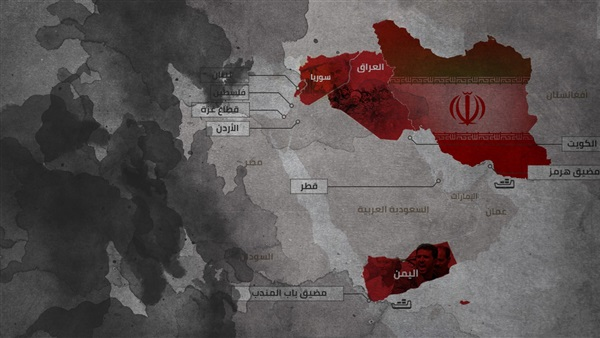
Portraying Iran’s potential collapse as the end of the Arab World is nothing more than a weak justification for siding with it especially in light of the wars, orchestrated coups, and calculated interventions the Arab world has endured, many of which Iran played a role in, beginning in Iraq and extending to Syria. Today, only a few significant Arab military powers remain.
As discussions about Iran’s decline intensify, some voices claim that its fall would mean the end of the Arab region itself. Such claims, however, do not suggest that Iran ever served as a protector of Arab lands. On the contrary, it has played a notable role in weakening the region.
Iran also contributed to undermining Iraq after a prolonged war that lasted a decade. What followed was a coordinated effort to deconstructed Iraq, weaken its military, and plunder its resources in partnership with the U.S. occupation despite the fact that Iraq’s army was once considered the strongest in the region and a primary threat to Israeli military dominance. With Iraq’s defeat began the broader Arab decline. Regardless of the justifications, what happened would likely have unfolded whether Saddam Hussein had invaded Kuwait or not.
Focusing on such details allowed Iraq to be isolated and targeted. Its history and oil were drained, its people killed and displaced, in a calculated and shocking process that silenced many and left Arab, particularly nationalist, forces disoriented. Iran was not absent from this scene.
Iran’s influence in the Arab World also extended to strengthening Hamas, an Islamist movement with ideological ties that align, in part, with Iran’s approach of downplaying the centrality of the nation-state. While the Palestinian cause has been heavily invoked by both, it has not necessarily been the ultimate objective.
With Iranian support, Hamas was able to militarily weaken the Palestinian Authority, despite the latter’s limited weapons due to occupation constraints. Weapons were smuggled into Gaza under the watch of the occupying forces, in an obvious contradiction. These arms ultimately enabled Hamas to consolidate control over the Gaza Strip for nearly two decades.
Other actors, such as Qatar, also played a role by financially supporting Hamas, further strengthening it at the expense of the Palestinian Authority, the holder of the national Palestinian project. The continued recognition of Hamas’ rule, and attempts at reconciliation between what were framed as “two rival factions,” rather than between a legitimate authority and a group that had seized power, occurred within complex political contexts in which U.S. policy played a role. All of this came at the expense of the Palestinian national project.
Meanwhile, the Palestinian Authority was deprived of financial support, pushing it into a severe economic crisis that continues today. While some attribute this to corruption, a significant part is linked to its political stance, particularly regarding the “Deal of the Century”—after which Arab and European support was cut off under U.S. pressure, in addition to Israel withholding Palestinian tax revenues that had long funded public sector salaries.
It is also important to recall Iran’s support for change in Libya and its welcoming of the fall of Muammar Gaddafi, despite his long-standing support for the Palestinian cause.
In Syria, despite Iran’s substantial backing of Bashar al-Assad’s regime, reports indicate that this support waned at critical moments. Iranian circles acknowledged that the battle had become unwinnable, and the Syrian leadership was informed that no further support could be provided. Nonetheless, Iranian leadership attempted to downplay the strategic loss.
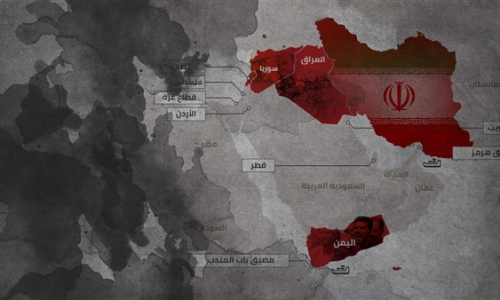
Iran has intervened in several Arab countries, including Lebanon, Kuwait, Syria, Palestine, the Gulf states, and even parts of North Africa. Yet some still view it as a protective stronghold, swayed by slogans such as the “Axis of Resistance” without fully grasping the complexities of the situation.
What is needed today is a deeper understanding of these dynamics beyond slogans, in order to build a coherent Arab position capable of preventing the further collapse of what remains of the region’s key states and military powers, such as Egypt, Saudi Arabia, and Algeria. Perhaps it is still possible to salvage what remains, for as the saying goes: better late than never.
 28 Total Count