By Taghreed Saadeh
Everything requires deliberation. Politics is not a collection of slogans, but rather a web of complexities and interconnections, an art of what is possible at a given historical moment. This is how the Palestinian Authority has approached the situation in Gaza, following the consequences of Hamas’s policies and reckless gambles. The leadership’s approach was driven by political responsibility, an approach that will likely be viewed with appreciation once this phase is reassessed.
In this context, the formation of a Palestinian technical committee, headed by a senior Palestinian Authority official, Ali Shaath, is significant. In his public statements, he confirmed that the committee’s work will fall within the framework of the Palestinian Authority’s programs and projects, under its clear political mandate. Despite ongoing attempts to impose factional quotas favoring groups close to Hamas, the reality is unmistakable, the ultimate authority remains with the Palestinian Authority, as is currently the case at the Rafah crossing. This was a national effort aimed at correcting the situation and reintegrating Gaza with the West Bank.
Accordingly, those who speak of the “collapse of the Palestinian Authority project” are, intentionally or otherwise, diverting the political compass and serving a vision that seeks power as an alternative to the Authority, rather than partnership in serving the Palestinian cause.
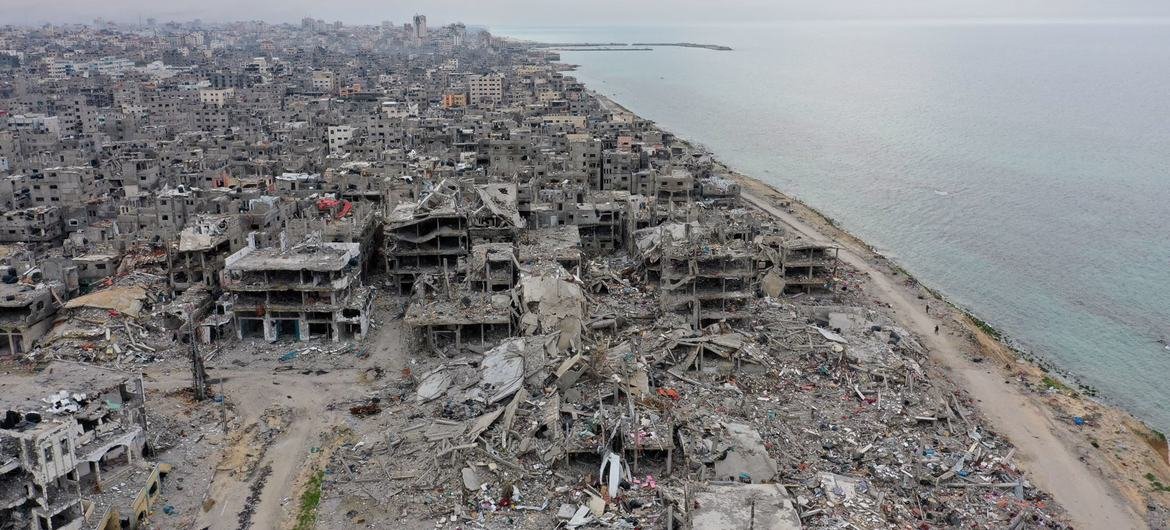
From this perspective, it can be argued that October 7 served the Israeli occupation more than Hamas’s supporters are willing to admit. It provided Israel with years’ worth of exceptional justifications unlikely to be repeated to unleash a catastrophic assault on Gaza, accompanied by widespread destruction and horrific massacres.
By contrast, and without any credit due to Hamas, in fact, despite its contribution to Gaza’s exposure, what emerged was a genuine political and diplomatic struggle to preserve the idea of a Palestinian state. This struggle has been ongoing since the declaration of independence in 1988 and has persisted despite immense obstacles. Given these realities, Palestinians had no choice but to focus on saving Gaza from annihilation, rather than gambling on military adventures devoid of a national political horizon.
The Palestinian Authority’s response was strong, calculated, and supported at the Arab, European, and Islamic levels. It was not a political vacuum, as some attempt to portray it, nor can the experiences of Fatah and Hamas be placed on equal footing. Nor is it legitimate to assign equal responsibility to both, particularly after many have shifted from openly supporting Hamas to adopting a discourse of false equivalence under the banner of “opposing all sides.” This new tone, increasingly echoed by some intellectuals, persists despite clear evidence of the extensive damage Hamas has inflicted on both the Palestinian cause and Palestinian society.
The voices that still speak on behalf of Hamas will gradually fade, not because of electoral laws, as is often claimed, but because the moment of accountability is approaching through the ballot box. Hamas itself amended its political program in 2017, accepting a state on the 1967 borders. This confirms that it is a pragmatic organization that maneuvers under the banner of “resistance,” while historically prioritizing its own survival above all else.
Hamas has completed its role in obstructing the Palestinian national project, squandering years of the cause and tearing at the social fabric of a society in which struggle was an integral part of identity. This was the legacy of our grandparents and parents, and what we sought to pass on to our children, until Hamas emerged to divide society mercilessly into “resistors” and “collaborators,” overturning values and creating deep fractures within a community whose primary goal had always been to end the occupation.
Is this not sufficient reason for Hamas to step aside?
Yet, until its final moments, the movement continues to chase illusory “achievements” following a profound failure and severe damage to the Palestinian cause and society. The rush toward factional or governmental gains can only come at the expense of the Palestinian people and their national struggle. The language of slogans no longer mobilizes public support as it once did.
The Palestinian people have begun to clearly recognize the scale of harm Hamas has inflicted upon both the cause and society. Had I been in Hamas’s leadership, I would have apologized to the Palestinian people and redirected the zakat funds collected in the name of the cause toward genuine development projects in Gaza, rather than using them to entrench partisan loyalties. Employment based on affiliation rather than competence has deepened divisions and weakened the social fabric.
Instead, Hamas continues to cling to this approach, showing no regard for the societal damage it has caused or the national cost of its policies.
Today, Hamas would be better served by silencing its media commentators. Their rhetoric no longer convinces anyone; it only exposes intellectual shallowness and detachment from reality. What the movement has done to the Palestinian cause and its people is far too grave to be concealed by slogans.
Hamas has executed its opponents, distorted the legacy of national figures, and carried out public executions broadcast on television, acts no less appalling than the crimes of the occupation. After years of massacres, the continuation of this discourse amounts to a free service to Israel.
Accountability will be long in coming, but if Hamas seeks even a minimal level of stability, it must withdraw, remain silent, and allow space for rebuilding the Palestinian national project. Persisting along this path will only lead to further exposure and loss of legitimacy. One day, the Palestinian people may come to treat Hamas as they treat the occupation itself.
The decline of Hamas is no longer a matter of conspiracy, it is the direct result of its own actions.
 50 Total Count