By Taghreed Saadeh
It appears that media which relies on confrontational and non-objective approaches, while focusing on trending issues without proper verification, has gained a wide audience. This is happening in an environment flooded with information some of it accurate, much of it misleading.
It has become easy for individuals to adopt certain positions, especially on issues related to the occupation, without verifying the facts. This problem became particularly evident during the war on Gaza. Simply supporting Hamas can earn someone the label of “hero,” while even mild criticism may lead to the complete dismissal of one’s professional or academic credibility, along with accusations of disloyalty.
This creates a difficult equation in a context shaped by misinformation and lack of awareness, especially given the powerful influence of social media in shaping public opinion.
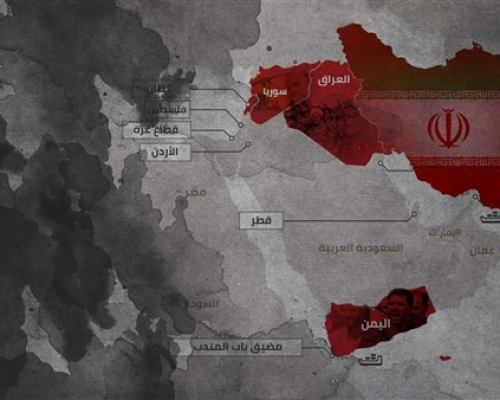
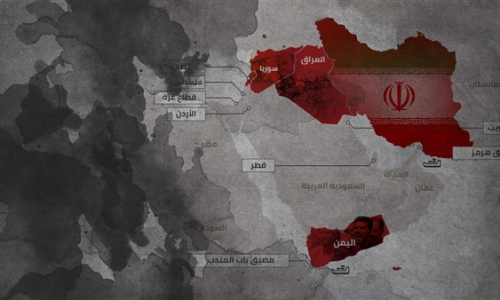
When analyzing developments in the Arab region, some tend to focus only on the shortcomings of certain Arab states in order to dismiss any justification for their positions, while ignoring real threats to their sovereignty. For example, when discussing Iranian attacks on Gulf countries and Jordan, these states are often accused of complicity because of the presence of U.S. military bases, without recognizing that these countries themselves are being targeted, that they have the right to defend their territory against Iranian threat, and that their conflict with Iran has its own distinct dimensions.
The contradiction does not stop there. In the case of last year’s siege of Jenin refugee camp by the Palestinian Authority, harsh criticism was directed at the Authority for confronting certain groups, without acknowledging that these groups were reportedly backed by Iran and had attacked Palestinian authority stations. Yet the situation was portrayed as if the Authority had no right to defend its own institutions, simply because the opposing side is framed under the banner of “resistance.”
In Lebanon, the issue of sovereignty is similarly overlooked when discussing the continued presence of the Iranian ambassador despite the Lebanese government and foreign minister declaring him persona non grata. How can such a clear violation of a sovereign decision be justified, and then denied as a form of imposed influence?
In Iraq, the situation is even more complex, with external influence deeply embedded in state institutions, raising serious questions about the independence of political decision-making. Yet these realities are often downplayed or ignored.
A clear example of this pattern can be seen in some talk shows and podcasts that adopt a one-sided narrative without proper review. For instance, in certain podcast episodes hosted by Egyptian Dr. Rabab El-Mahdi, the idea that the Palestinian Authority is “collaborating” is repeatedly promoted across discussions, without balanced analysis. This is evident in both the framing of questions and the affirming tone of follow-up comments. In the same podcast, Egypt’s role as a mediator with Hamas is interpreted as political bias, rather than being understood as a natural role shaped by geography and regional responsibility, regardless of Cairo’s political differences with groups like the Muslim Brotherhood.
This type of discourse does not merely reflect public opinion, it amplifies and reproduces it without critical examination. Even more concerning, it often lacks basic standards of respectful dialogue, turning discussions from spaces of understanding into platforms for reinforcing bias. There is a significant difference between presenting an opinion for discussion and promoting it as an unquestioned fact.
Ultimately, the problem is not only about the positions themselves, but about how these positions are formed through non-objective media that reinforces bias and marginalizes facts. Continuing along this path risks normalizing external interference in Arab countries under appealing slogans until, perhaps too late, the true consequences become clear.
 6 Total Count