
By Taghreed saadeh
Yasser Arafat (Abu Ammar) was the man who led the Palestinian revolution for decades, transforming it from a national liberation movement into the foundation of a future Palestinian state.
On November 11, 2004, Abu Ammar passed away after nearly three years under siege in his headquarters in Ramallah, surrounded by Israeli tanks, armored vehicles, and soldiers.
He lived his final days a steadfast prisoner, refusing to compromise the independent Palestinian decision, or the fundamental principles of his people and he paid for that stance with his life.
From the very beginning of the Palestinian revolution, Arafat became a symbol of national unity, an icon who brought together the different Palestinian factions under one flag, the flag of Palestine.
Global powers tried to pressure and dominate him, but he faced the Israeli siege with unyielding will, refusing to sign any agreement that would end the Palestinian dream of return, freedom, and independence.
From the start of his siege in the Muqata‘a in 2002 until his death in November 2004, it was evident that the goal was not only political isolation, but also the slow assassination of a leader determined to preserve Palestinian independence, free from foreign guardianship or regional control.
Years later, the full truth behind his death remains undisclosed.
Investigations conducted in France, Switzerland, and Russia pointed to possible poisoning with the radioactive substance polonium-210, yet the case was never officially closed, as though the death of a leader of Arafat’s stature could simply fade without justice or accountability.
Born in Jerusalem on August 4, 1929, Mohammed Yasser Abdel Raouf Dawoud Suleiman Arafat al-Qudwa al-Husseini received his education in Cairo, where he later joined the Egyptian army and fought during the Tripartite Aggression against Egypt in 1956.
He studied civil engineering at King Fuad I University (now Cairo University) and became active early in the Palestinian national movement through the Union of Palestinian Students, later serving as its president.
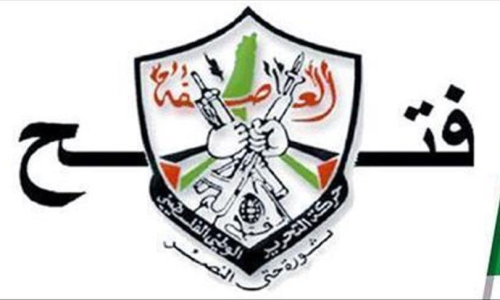
In the 1950s, Arafat co-founded the Palestinian National Liberation Movement Fatah, along with a group of Palestinian nationalists. He became its official spokesperson in 1968 and was elected Chairman of the Executive Committee of the Palestine Liberation Organization (PLO) in February 1969, succeeding Ahmad al-Shuqairi and Yahya Hammouda.
In 1974, Arafat delivered his historic speech before the United Nations General Assembly, declaring, “I have come bearing an olive branch in one hand and a freedom fighter’s gun in the other. Do not let the olive branch fall from my hand.” That speech marked the first official international recognition of the PLO as the legitimate representative of the Palestinian people.
Arafat led the Palestinian resistance in Beirut during the Israeli invasion of Lebanon in 1982, enduring more than 80 days under siege before being forced to evacuate with his forces to Tunisia, in one of the harshest chapters of the Palestinian struggle.
In 1993, he signed the Oslo Accords with Yitzhak Rabin under U.S. mediation, recognizing Israel in exchange for its recognition of the PLO. The agreement paved the way for the establishment of the Palestinian National Authority and Arafat’s return to his homeland after decades in exile.
When the Second Intifada erupted in 2000 following Ariel Sharon’s incursion into the Al-Aqsa Mosque, Arafat stood firmly with his people, rejecting U.S. and Israeli pressure to end the uprising or make political concessions.
In 2002, Israeli forces besieged him again in his Ramallah compound, destroying his offices and preventing him from traveling for medical treatment.
He remained defiant in a small room, addressing his people through radio and television, reaffirming his commitment to resistance and his refusal to recognize Israel as a “Jewish state.”
By the autumn of 2004, Arafat’s health deteriorated rapidly. He was transferred to Percy Military Hospital in Paris for treatment, amid growing suspicions of poisoning. He passed away at dawn on Thursday, November 11, 2004.
More than two decades after his death, Palestinians continue to see Arafat’s assassination as the assassination of their national will, a calculated attempt to cripple the Palestinian struggle for liberation and independence.
Yasser Arafat departed in body, but remains an eternal symbol of a people still fighting to live with freedom and dignity on their own land.
 70 Total Count