By Taghreed Saadeh
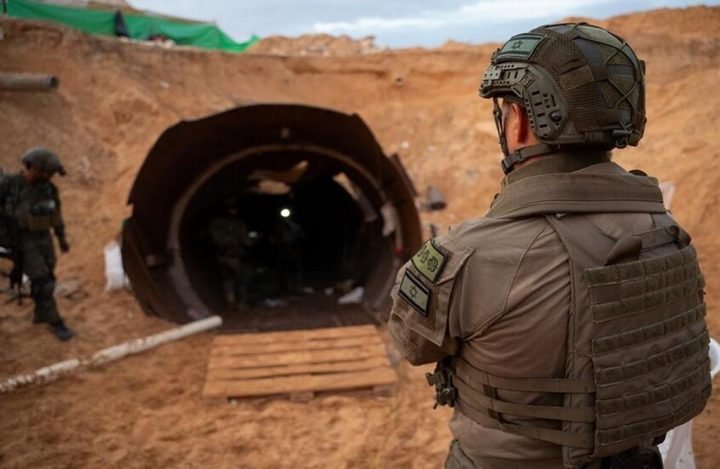
While over two million Palestinians in the Gaza Strip continue their daily struggle to survive amid exposure, hunger, cold, and a shortage of medicine with clear violations of the ceasefire by the occupation, the media remains preoccupied with a file that involves no more than 200 Hamas fighters trapped in the Rafah tunnels. The Al-Arabi TV channel, which is close to Hamas, even reported that only 50 fighters are involved.
Thus, the broader tragedy is transformed into a manufactured drama played out behind the scenes under the headline “the fighters’ crisis,” as if the fate of all Gaza hinges on the outcome for these 200 fighters at most, rather than on the reality of the Palestinians living above ground.
What is referred to as the “Rafah tunnel crisis” is nothing more than a carefully orchestrated political fabrication, designed to keep the conflict within a narrow circle that can be controlled both in the media and through negotiations, preventing Gaza from moving into the second phase of the Trump plan.
Since the ceasefire came into effect, it has been clear that Washington and Tel Aviv are looking for a side issue that can justify the continued Israeli military presence in the south and create the impression that there remains an “unresolved security problem.” Meanwhile, Hamas has found in this crisis an opportunity to assert its presence and remind everyone that it still holds elements of solutions on the ground.
The result is an implicit understanding between the two sides to keep the tunnels as a pretext for freezing the current situation, while Gaza is left without electricity, medicine, or a future.
Talk of “the fighters’ crisis,” dominates headlines, while the fate of hundreds of thousands of displaced people left in the open, without shelter, food, or basic medical supplies, and without any future, goes largely ignored. The occupation continues to kill with missiles, while Hamas remains control silently.
The tragedy of Palestine is reduced to a tunnel, the people are erased from the equation, the occupation feels more secure, and daily suffering becomes merely a faint backdrop to events, paid for by the people of Gaza and the Palestinian cause alike.
The crisis began when Hamas announced that contact with its members in Rafah had been lost before the ceasefire took effect on October 11, 2025, demanding through intermediaries that the occupation authorities allow the fighters safe passage across the “Yellow Line.” Hamas’s demands followed the killing of an Israeli soldier in Rafah by its fighters, who claimed they were unaware of the ceasefire.
Today, the Israeli occupation army announced that “It had killed a number of Hamas militants following clashes east of the city of Rafah, at the southernmost edge of the Gaza Strip, where dozens of the group’s fighters remain trapped inside the city, awaiting the resolution of their crisis.”
 46 Total Count