By Taghreed Saadeh
I am not drawn to the style adopted by Tamer Al Misshal in his program What Is Hidden Is Greater . This is not merely because I oppose Al Jazeera’s policies, although I do but rather from a purely professional standpoint. What the program provide appeals to a specific segment of the audience, relying heavily on emotional manipulation. This type of discourse resonates primarily with an ideological audience, where critical thinking is sidelined in favor of ideology.
One of the major contradictions in the program, particularly in the latest episode, “On the Line of Fire” is how Al Jazeera presents the content as if it were exclusive, as though it operates in isolation from its actual base in Doha. The narrative leans on the idea that Al Jazeera functions independently from the Qatari government, yet this particular episode clearly reflected a distinctly Qatari position.
It is evident that the program was used to directly present the Iranian perspective, while simultaneously denying that Qatar had made any deals with Iran to halt attacks. The imagery of destruction was also used in a way that subtly suggests that Doha may have escaped the kind of severe Iranian strikes seen in other Gulf countries.
Despite hosting the spokesperson of the Iranian Ministry of Foreign Affairs and clearly presenting Iran’s position, the overall narrative strongly emphasizes denying any agreements while also highlighting what Tehran may be harboring toward Doha whether in the form of missile threats or sleeper cells. This could have easily been delivered in a brief three minute news segment. However, placing it within Al Misshal’s program gave it amplified weight, not because of the substance, but due to the dramatic sound effects and production style he relies on, seemingly believing in their persuasive power. It is incredible what passes for influence today.
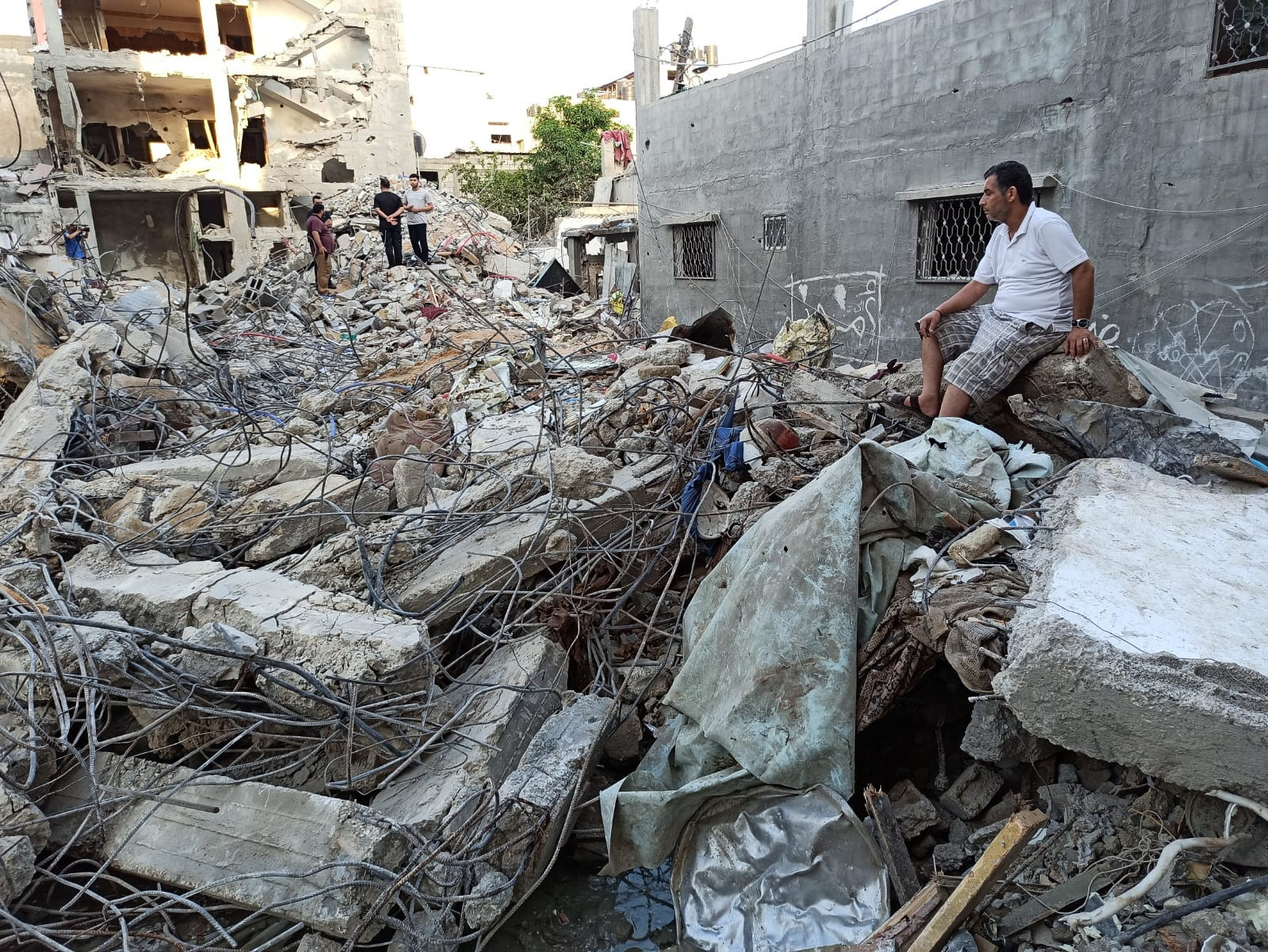
An even greater contradiction lies in the fact that Al-Misshal, himself from Gaza, repeatedly emphasized the importance of protecting infrastructure in Qatar, a phrase that was reiterated throughout the episode. This stands in stark contrast to Al Jazeera’s own role in amplifying Hamas’s performance during the war on Gaza. The portrayal of a “strong Hamas” has been used as a justification for the destruction of Gaza’s infrastructure, the loss of thousands of lives, and the erasure of an entire chapter of Palestinian history.
At the same time, the network continues to host what it calls “analysts,” many of whom are ideologically driven figures with no substantial research background, yet who exaggerate events. The real issue is that this influence has become deeply rooted among a large segment of the Arab public.
Al-Misshal’s program also highlighted a cell allegedly linked to Iran. Yet when it comes to Iran-backed cells within Palestine that attempted to replicate the Gaza scenario and extend it into the West Bank, as seen in last year’s Jenin camp events Al Jazeera’s coverage was misleading. It portrayed the actions of the Palestinian Authority as comparable to those of the occupation, with little regard for the reality on the ground or for the Palestinian cause itself. There was no space given to explain that these were Iranian-backed cells carrying out destabilizing operations and attacking Palestinian police stations. The most critical information was lost amid the network’s theatrical presentation and its carefully selected guests, many of whom are unqualified, yet ideologically aligned.
I was also struck by the scale of the backlash against Hiyam Nawas, Al Jazeera’s new analyst, as though she were an exception. How many individuals has the network hosted from Palestine who have no connection to political analysis or research, but merely express pro-Hamas views on social media? That alone seems to qualify them for airtime. And amid this overwhelming noise in support of “resistance,” even when it may be hollow or counterproductive, critical voices were drowned out.
What lies beneath is far greater than what Al Jazeera presents. What Lies Beneath is, in essence, one of the most simplistic programs, wrapped in a dramatic format and delivered in a steady tone meant to create the illusion of revealing something profound. This illusion can mislead some viewers, serving to push Qatari agendas through emotional appeal and the distortion of information.
Behind all this, the American role remains presents, managing contradictions in the region and skillfully influencing Arab public opinion through such media tool. This platform has become one of the most effective tool of influence in the region today.
 9 Total Count