By Taghreed Saadeh
In Palestine, prisoners and martyrs are regarded as a fundamental part of the national memory and a symbol of the sacrifices made by the Palestinian people throughout their history. There is broad consensus on this cultural understanding. A culture of reverence and respect is deeply embedded in the collective consciousness and is reflected in long standing social and political practices, where solidarity often extends across political factions, even during the most difficult periods of division and internal conflict.
We have repeatedly seen that, even during the internal political split in the Gaza Strip, when Hamas took control, President Mahmoud Abbas expressed condolences to Hamas leaders upon the loss of their children. Likewise, Palestinians across all factions Fatah, Hamas, Islamic Jihad, and the Popular Front have consistently participated in funerals of martyrs from different political affiliations. This social and political tradition has remained constant over the years despite deep political disagreements and divisions.
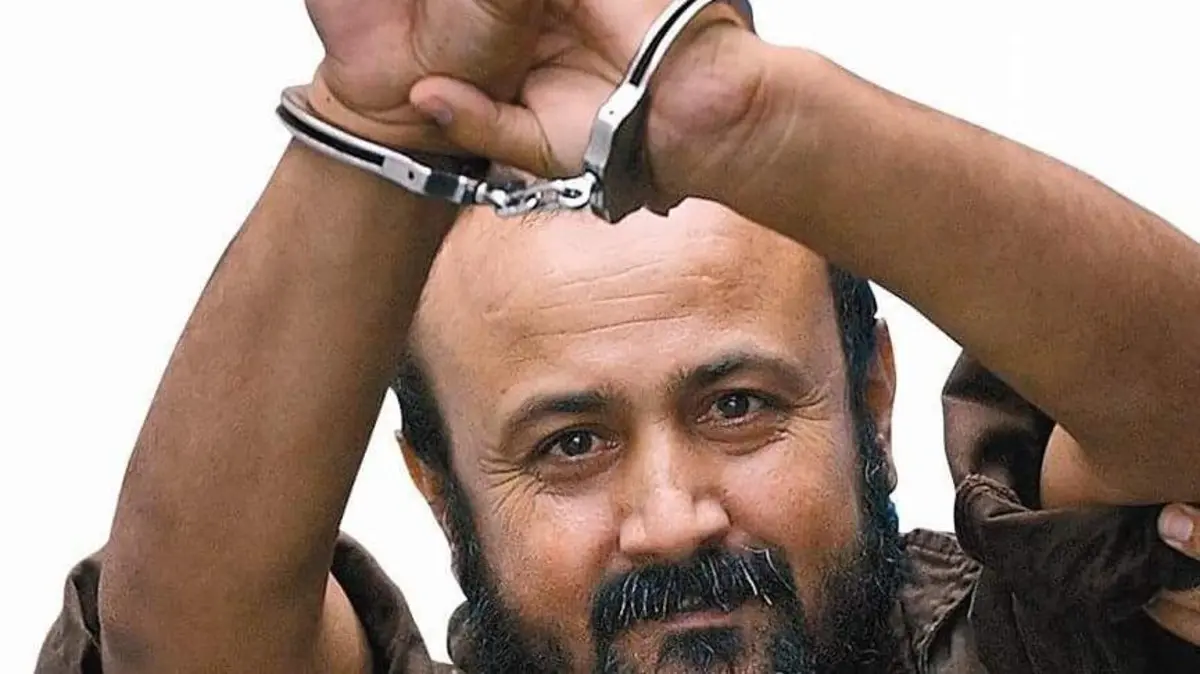
Within this context, a discussion recently aired on Sky TV based on the UAE raised the possibility of imprisoned leader Marwan Barghouti running in the Palestinian presidential elections. According to the Palestinian Elections Law of 2007 and its amendments, the requirements for presidential candidacy are clearly defined. These include that the candidate must be Palestinian by birth to Palestinian parents, at least forty years of age, permanently residing in the Palestinian territories, registered in the voter registry, and fully qualified to exercise voting rights. The candidate must also commit to the Palestine Liberation Organization as the sole legitimate representative of the Palestinian people, adhere to the Declaration of Independence, and comply with the provisions of the Basic Law.
This raises a key question: do these conditions apply to Marwan Barghouti, who is currently imprisoned in Israeli detention facilities and is not physically present in the Palestinian territories? Can he legally be considered as meeting the requirement of “permanent residence,” and does his current situation allow him to exercise the legal rights of both a voter and a candidate?
In previous Palestinian electoral practice, several prisoners participated in the 2006 Legislative Council elections and some even won seats while still in Israeli prisons. In fact, around 15 prisoners out of 18 candidates succeeded, including 11 representatives from Hamas, the Secretary-General of the Popular Front Ahmad Sa’adat, and Marwan Barghouti himself. At the time, the electoral law allowed prisoners to run for office and be elected without requiring their physical presence in the Palestinian territories. This precedent made their participation legally possible.
However, this case differs significantly from a presidential candidacy, as the position of president involves executive and sovereign responsibilities that require physical presence and the direct ability to exercise governing authority. This makes legal comparison between the two cases imperfect, despite their symbolic and national overlap.
It has often been said that the 2021 elections were cancelled due to Marwan Barghouti’s potential candidacy and fears within Fatah that he might win. However, this interpretation is not entirely accurate, as the process never actually reached the official nomination stage before the Election Commission, and his legal eligibility was never formally assessed.
It is also notable that campaigns calling for Barghouti’s release are often accompanied by efforts to promote him as a political leader capable of competition. This raises questions about whether such narratives fall strictly within legal electoral frameworks or whether they extend into political and media positioning.
Marwan Barghouti, in principle, is a well-known political figure and leader within Fatah, and he has the right to express his intention to run. However, the timing of this announcement being discussed on Sky Tv in the UAE, rather than originating from his own campaign, and in the absence of a formally announced election date, raises questions about the underlying political motivations particularly in light of ongoing Palestinian American political and diplomatic discussions that may reshape the role of the Palestinian Authority in Gaza. Such developments could potentially alter internal power balances and limit opportunities for political rivals to dominate the political landscape in Gaza as was previously the case.
 34 Total Count