By Taghreed Saadeh
Since its establishment in Jerusalem in 1953, Hizb ut-Tahrir has advocated the creation of a caliphate and governance based on what it describes as religious law. Its political project predates the emergence of ISIS by more than six decades.
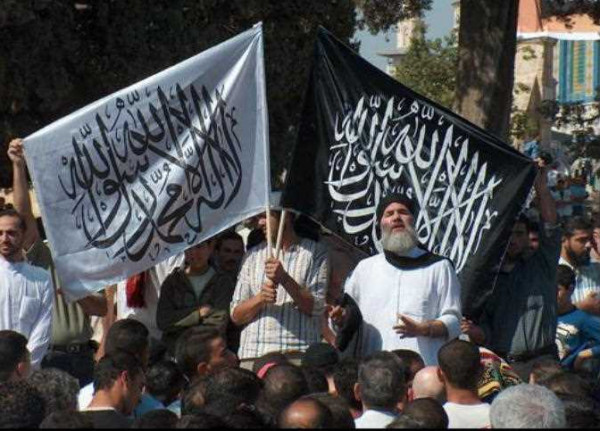
The caliphate and the black flag bearing the Islamic declaration of faith are among the similarities between Hizb ut-Tahrir and ISIS. However, the two differ fundamentally in their methods. Hizb ut-Tahrir publicly rejects armed action and says the caliphate should be established through political and ideological change and by seeking the support of those capable of bringing about political change.
In Palestine, the party has come into repeated confrontation with the Palestinian Authority. It rejects elections and the concept of a civil democratic state, while promoting the caliphate as an alternative political system. Palestinian Authority security forces have periodically detained and pursued members and supporters of the party over activities and events that authorities considered unlawful or aimed at undermining the Authority.
Hizb ut-Tahrir in Brief
According to its own literature, Hizb ut-Tahrir describes itself as “a political party whose principle is Islam,” saying that “politics is its work, and Islam is its principle.” Its stated goal is to restore the caliphate and governance according to Islamic law.
The party was founded by Taqi al-Din al-Nabhani in Jerusalem in 1953. Its current leader, Ata Abu al-Rashta, has headed the party since 2003. Born in the village of Sa’ir in the Hebron district, he succeeded Abdul Qadeem Zallum, who was also from Hebron. The party has maintained a strong presence in Hebron, one of the largest governorates in the West Bank.
Hizb ut-Tahrir says the path to the caliphate is clearly defined and involves seeking the support of people with sufficient power to facilitate political change, followed by a voluntary pledge of allegiance.
The party says its vision is a caliphate based on what it calls “the method of Prophethood.” It presents the caliphate as a state that would provide security, justice and equal rights for Muslims and non-Muslims.
Change and the Islamic State
Hizb ut-Tahrir advocates fundamental and comprehensive change rather than gradual reform. According to its literature, it seeks to build public support for Islam and then gain the backing of those capable of bringing about political change.
The party rejects armed struggle. It argues that Palestinian resistance alone cannot liberate Palestine and says liberation should instead be carried out by an Islamic army from Muslim-majority states.
The Party in Palestine
Hizb ut-Tahrir claims a broad support base in Palestine, particularly in the West Bank and Gaza Strip, and says it operates in more than 40 countries.
Its Palestinian leadership says the party relies on individual domestic contributions and does not accept outside financial support.
No to Palestinian Elections
Hizb ut-Tahrir rejects participation in Palestinian legislative and presidential elections. It considers the Palestinian Authority to be operating under occupation and argues that taking part in elections would amount to recognizing the existing political framework.
The party also rejects the civil democratic state, arguing that it separates religion from public life and is contrary to Islamic law.
Its opposition to elections and the existing political system, combined with its advocacy of a caliphate, has contributed to its tense relationship with the Palestinian Authority.
In the West Bank, Palestinian Authority security forces have periodically detained and pursued members and supporters of Hizb ut-Tahrir over rallies, political events and the distribution of statements and publications that authorities considered unlawful, as well as activities they viewed as inflammatory or aimed at undermining the Authority.
Hizb ut-Tahrir, for its part, describes these measures as restrictions on its political and religious activities, while the Palestinian Authority presents them as measures against activities it considers unlawful or threatening to its authority and institutions.
 45 Total Count