By Taghreed Saadeh
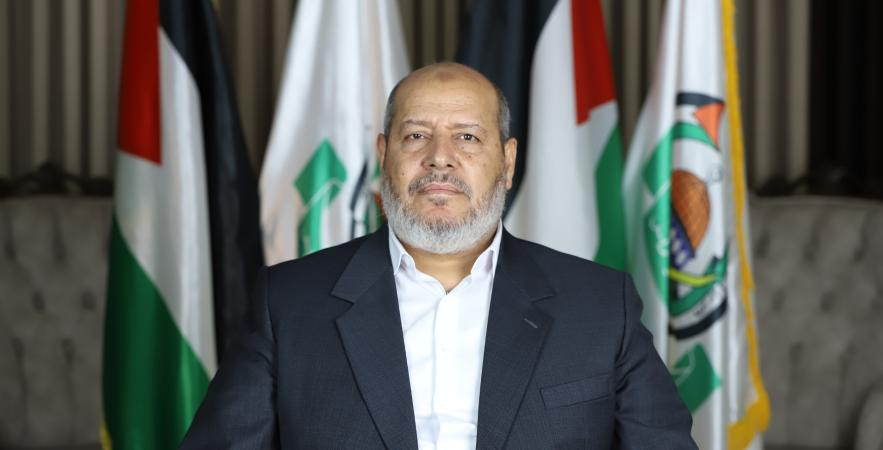
Despite the extensive celebration surrounding Hamas’s internal elections, and the election of Khalil al-Hayya, the former head of Hamas in Gaza, as chairman of the movement’s political bureau, and despite claims by some that the process represented a democratic exercise, the notable point is that the leadership of the movement has not moved beyond the familiar pattern. Khaled Meshaal continues to represent the movement’s leadership abroad, while Khalil al-Hayya has become head of the political bureau. The difference between the two candidates was only one vote.
Many have focused on this narrow margin, viewing it as a sign that the movement is approaching a new phase in its approach and policies. However, it appears that matters will largely remain unchanged, because the Shura Council, which elected the leader and members of the political bureau, remains close in its overall views. The claim that a new chapter has begun in the movement does not necessarily apply to al-Hayya, who previously served as deputy to the late Yahya Sinwar, the architect of the October 7 attack.
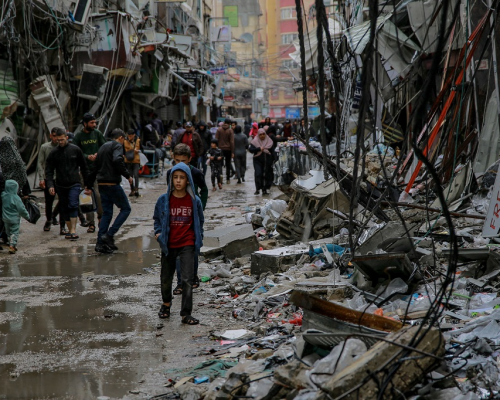
What is also notable is that these elections, which were widely celebrated by Hamas supporters among writers and media figures, overlooked the fact that governance in Gaza has fundamentally changed. The movement no longer administers a functioning territory and government as it did in the past. Only 30% of the Gaza Strip remains under Palestinian control, a direct consequence of the events that followed October 7.
Hamas, which has weakened alongside the devastation of Gaza, and as the overall population of the Strip has declined due to the mass killings carried out by the Israeli occupation following October 7, must be viewed through this reality rather than through exaggerations or political claims. It can no longer be assumed that the movement retains the ability to manage Gaza as it once did.
Hamas has handed over a Gaza that is partially occupied, devastated, and severely damaged. Yet the movement continues to maneuver around the issue of its weapons, which, in common Palestinian expression, resembles the “Juha’s excuse.” The presence and effectiveness of these weapons have disappeared from the reality on the ground, as there are no longer reports of major operations by the Qassam Brigades to retake control of the Strip, nor the kind of confrontations that were previously amplified by Al Jazeera. Everything has diminished, and life in Gaza has been brought to a standstill under the threat of displacement plans. Israeli forces are massing inside the Strip and moving through it freely, without meaningful resistance from Hamas.
The narrow voting margin, and the failure of either candidate to secure the required 36 votes from members of the Shura Council according to the movement’s internal framework, even after a second round of voting, indicate that Hamas itself is at a crossroads and uncertain about its future direction. The single vote that gave al-Hayya the advantage over Meshaal may represent a temporary stage rather than a lasting shift, especially amid reports that al-Hayya’s term as head of the political bureau may last only one year. This suggests that no fundamental transformation has taken place within the movement, and that it is likely to continue its existing approach of managing balanced relations according to changing circumstances.
The pragmatism that some fail to recognize within this Islamist organization is reflected in its willingness to consider abandoning armed struggle in exchange for political gains. This was evident during the presidency of Mohamed Morsi in Egypt, when Hamas became involved in the Muslim Brotherhood’s political project and quietly distanced itself from armed rhetoric, with calls for resistance becoming far less prominent. The consequences of that period were later attributed mainly to Khaled Meshaal, allowing the organization to avoid broader repercussions. Claims that the movement’s current tactics are fundamentally different are difficult to sustain, because Hamas is governed collectively through its 18 member political bureau, whose identities remain undisclosed for security reasons. This body shapes and manages the movement’s daily political direction, not the chairman alone.
According to Hamas’s internal structure, the head of the movement leads executive work but does not stand above the political bureau or the Shura Council. Major strategic decisions are made institutionally through the movement’s leadership bodies.
This means that Palestinians may face continued political confrontations driven by Hamas, at the expense of the people of Gaza and the broader Palestinian cause, without accepting responsibility for the consequences. The appearance of renewal may remain largely symbolic, while the movement’s direction continues toward political confrontation rather than fundamental change.
This also means that the coming year may be a difficult one, shaped by claims promoted by Al Jazeera that the movement still holds decisive influence on the Palestinian street, despite the decline and erosion of its authority and standing within Palestinian society. However, the reality is that the upcoming legislative elections, scheduled for November, will produce a new parliament and a more diverse opposition, far removed from the traditional opposition that dominated the previous twenty years. This could mark the end of a prolonged and contentious chapter that created cycles of political confrontation, led to the separation of a part of Palestine (the Gaza Strip) and resulted in more than 70% of it being handed over to occupation forces under the claim of resistance.
 49 Total Count